Family Connections through Gratitude Conversations
11/17/2025
Gratitude can and should live quietly in our daily conversations. The most powerful gratitude practices are those that happen in car rides, dinner tables, and bedtime routines.
For the youngest humans, these moments build connection and teach emotional awareness. For grown-ups, they offer a reminder of what’s going right, even on the busiest days.
Going From “What Did You Do?” to “Who Helped You Today?”
As caregivers of young children, we tend to ask children the same question every afternoon: “What did you do at school today?”
It’s a good question, but it can lead to a quick, “I don’t know” or “Nothing.
The following questions can open doors to deeper conversation:
“Who helped you today?”
“What made you smile?”
“Who did you help?”
“When did you feel proud of yourself?”
They invite children to notice kindness, empathy, and community, which are the building blocks of gratitude.
How Teachers Can Spark Family Gratitude Conversations
Early educators and ECE leaders can make gratitude part of home–school connection without adding to anyone’s workload. Try sharing a short reflection prompt in newsletters or take-home notes:
“This week, ask your child what they enjoyed most about their day.”
“Talk about something kind your family did or noticed today.”
“Take turns saying thank you for something small — like a favorite snack or a cozy blanket.”
Encourage families to keep it light, not forced. The goal is for children to gain awareness and appreciation. We don’t need perfection.
For Families: Simple Gratitude Routines
Here are a few ways to bring gratitude into daily life:
Bedtime Reflections:
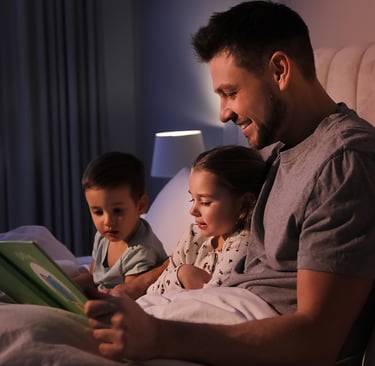
Before lights out, ask your child to share one “thankful thought.” Keep it short, natural, and child led.
Dinner Table Prompts:
Use question cards or a “Gratitude Bowl.” Each person picks one slip and answers aloud:
“Someone who helped me today was…”
“I’m thankful for…”
“A moment that made me laugh today was…”
On-the-Go Gratitude:
Car rides are the perfect time for reflection. Try:
“What’s something you liked about today?”
“Who was kind to you?”
Weekend Notes:
Leave little thank-you notes for family members. Young children can draw theirs instead of writing.
Children learn gratitude through modeling and conversation. When adults consistently name moments of kindness or appreciation, children begin to see the world through that lens too. Gratitude helps children recognize that good moments still exist, even on challenging days. It helps families slow down, reconnect, and build emotional vocabulary together.
For Educators and Families Alike
Gratitude is a shift in how we see the ordinary. Whether it’s a shared laugh, a kind gesture, or a quiet moment at bedtime, gratitude grows stronger the more we name it.
Take a deep breath and ask yourself tonight: Who made my day a little lighter?
…Here is where we can begin our gratitude journey.
*This post draws on research from Frontiers in Psychology, Developmental Psychology, the Journal of Positive Psychology, Psychology in the Schools, and Educational Integrity, as well as insights from the Greater Good Science Center at UC Berkeley and the University of Illinois at Urbana-Champaign.