Reflective Gratitude for Educators: Refilling the Adult Cup
11/9/2025
Gratitude belongs in the way adults show up every day for children. Teachers, parents, and caregivers all spend their days meeting needs, soothing big emotions, and keeping routines steady. That level of emotional labor takes a toll. Gratitude is how we refill the cup; how we remind ourselves that what we do is meaningful.
Modeling Gratitude for Children
Children learn gratitude by watching it in action. When adults say “thank you” to each other, acknowledge effort, or pause to appreciate a small joy, it sends a powerful message; we notice when things get hard.
Simple, authentic expressions matter most:
• “I appreciated how you helped your brother with his shoes.”
• “I’m glad we got through that busy morning together.”
• “That smile made my day.”
These small statements of thanks teach children that gratitude is relational.
Here are some ways that educators and families can refill that cup:
-End-of-Day Reflection
Pause for one minute at the end of the day. Ask yourself:
“What moment felt good today?”
You might find it in a child’s laugh, a kind word, or even a moment of calm in the chaos.
-Gratitude Check-Ins
Teachers: Start staff meetings by naming one positive thing that happened this week.
Families: Begin dinner or bedtime with a simple question. “Who helped you today?”
-Notes of Thanks
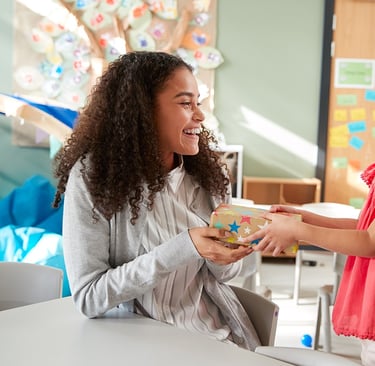
Write a short thank-you note to a colleague, a parent, or even your child. Recognition builds community and reinforces everyone’s sense of belonging.
-Shared Gratitude Spaces
Create a “Gratitude Wall” or “Kindness Jar” at home or in the classroom. Add sticky notes or drawings that highlight small moments of appreciation. Children love to see adults participating too.
-Self-Gratitude
Adults are quick to celebrate others but rarely themselves. Try saying:
“I stayed patient when I was tired.”
“I showed up even when it wasn’t easy.”
That’s gratitude, too, and children really benefit from seeing it modeled.
Why Reflective Gratitude is so Important
Gratitude grounds us in meaning. Research shows that regular gratitude practices reduce stress, strengthen relationships, and improve emotional well-being, for adults and children. When parents and teachers model gratitude, children internalize calm, connection, and optimism. It’s a way of protecting your emotional energy and building stronger, more compassionate communities around children.
*This post draws on research from Frontiers in Psychology, Developmental Psychology, the Journal of Positive Psychology, Psychology in the Schools, and Educational Integrity, as well as insights from the Greater Good Science Center at UC Berkeley and the University of Illinois at Urbana-Champaign.