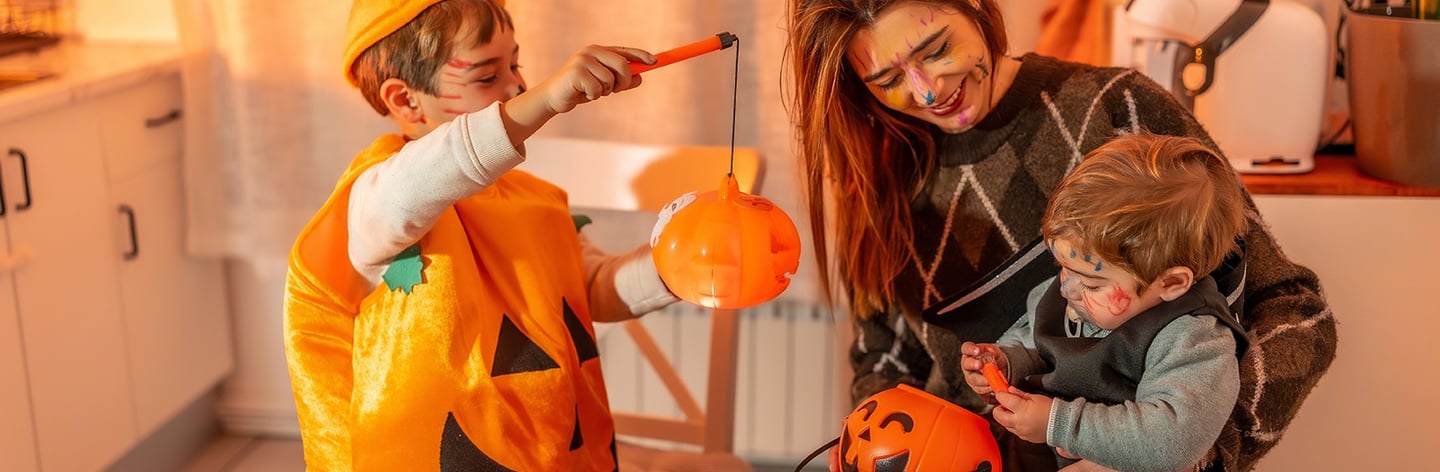
Spooky or Scared? Helping Young Children Navigate Halloween Emotions
10/22/2025
1. The Emotional Side of Halloween
Masks, strangers, costumes, and dark nights can challenge a child’s sense of safety. Young children thrive on familiarity — so when the world looks and sounds different, their nervous systems notice.
2. What Fear Looks Like in Little Bodies
Fear in children doesn’t always look like fear. It might show up as clinginess, crying, hiding, hyperactivity, or even laughter that feels “off.” These are signals of dysregulation, not misbehavior.
3. Prepare, Predict, and Practice
Predictability helps children feel safe. Show photos of costumes, read Halloween stories ahead of time, and talk about what will happen during trick-or-treating. Practice knocking on a door and saying “thank you” at home.
4. Co-Regulate Through Comfort
If a child becomes frightened, stay close, soften your tone, and model calm. Validation (“That was loud, huh?”) helps children understand their emotions are okay. Calm doesn’t mean ignoring fear — it means acknowledging it with warmth.
5. When Fun Turns to Fear
If a child decides not to participate, that’s okay. Forcing participation can heighten anxiety. Offer options: handing out candy, helping decorate, or drawing pumpkins inside. A sense of control builds confidence.
6. Reflection for Adults
Sometimes we push excitement because we love the fun. But when we notice fear through a child’s eyes, we create safety instead of pressure. That’s how joy grows naturally.
This Halloween, let’s help children feel safe enough to enjoy the magic — not just mask their feelings.
Halloween can be exciting — bright lights, costumes, candy, and laughter. But for many young children, it can also feel unpredictable, loud, and confusing. What we see as fun can feel scary to a child still learning how to make sense of the world.