
The Science of Calm: How Children Borrow Our Nervous Systems
12/7/2025
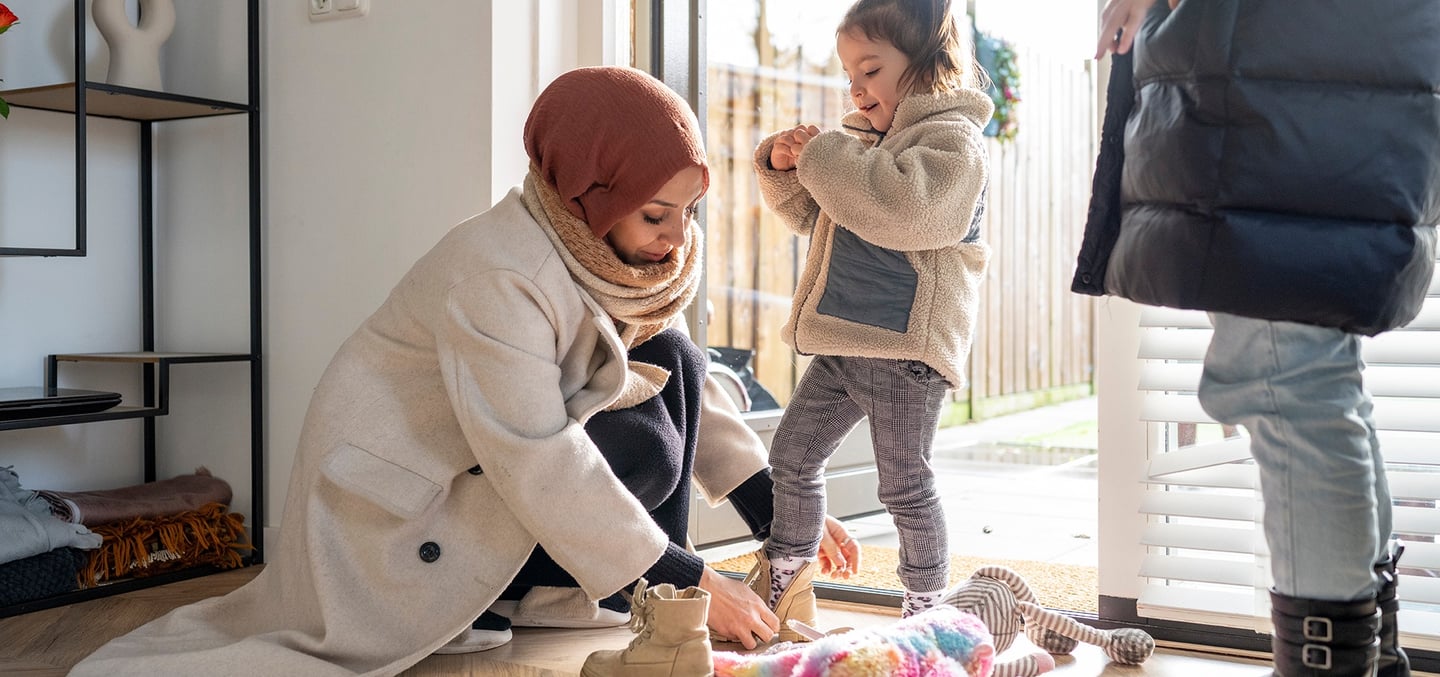
Winter invites us to slow down, but if you spend your days caring for young children, “slow” isn’t always a possibility. What is possible, no matter how chaotic the day feels, is creating moments of calm that change how children experience your classroom or home.
And the reason is simple:
Children borrow our nervous systems before they ever learn to regulate their own.
This is why your presence matters. When you offer steadiness, even in small doses, you give children something their developing brains cannot yet create on their own: a sense of safety, predictability, and connection.
Below is a deeper look at the science behind co-regulation and how you can use this knowledge to bring more peace into your daily interactions.
Children Regulate Through Us, Not Alone
Before age 7, the parts of the brain responsible for emotional regulation, the prefrontal cortex and its connections, are still under construction. This means young children…
feel emotions intensely
shift emotional states quickly
rely on adults to help return to calm
When your nervous system is steady, theirs can settle. When you are rushed, overwhelmed, or stretched thin, children sense it instantly.
It’s biology. Your tone, posture, breath, and responsiveness provide the blueprint children follow.
What Felt Safety Looks Like in Real Life
“Felt safety” is more than physical safety. It’s when a child feels safe in their mind & body.
Children feel safe when adults consistently offer:
a warm tone
slower movements
predictable routines
simple, compassionate language
clear boundaries delivered calmly
Your presence sends a signal, “I’m here, you’re safe, we can handle this together”. Children internalize that message long before they learn coping skills.
How Rest Supports Co-Regulation
Even tiny moments of rest restore the adult nervous system. When you are rested, even 10% more, your capacity to co-regulate increases.
Rest doesn’t have to mean long breaks. It can be:
a deep exhale before responding
letting your shoulders fall
softening your gaze
pausing for two seconds
releasing tension
These small resets communicate calm more powerfully than anything you say.
Five Simple Co-Regulation Practices You Can Use Today
1. Borrowed Breath: Take a long exhale. Children mirror your breathing.
2. Soft Voice, Slow Words: A slower cadence signals safety.
3. Move Closer, Lower, and Warmer: Proximity + calm posture = connection.
4. Predictable Calm Anchors: Use a repeated phrase such as 'Let’s pause together.'
5. Gentle Acknowledgment: “You’re having a big feeling. I’m here with you”.
You Don’t Need to Be Calm All the Time
Your goal isn’t perfection. Your goal is noticing your state and returning to calm when you can.
Every return to calm teaches children that emotions are manageable, adults can be trusted, and peace is possible.
Closing Thought
Children remember how you made them feel. When you offer co-regulation, through breath, tone, and presence, you give them an internal template for calm they will carry with them for life.
May this month bring you small pockets of rest, steady moments of presence, and the confidence that the calm you extend is shaping something powerful inside each child.
References
Center on the Developing Child. (2011). Building the Brain’s “Air Traffic Control” System: How Early Experiences Shape the Development of Executive Function. Harvard University.
Gillespie, L. G., & Seibel, N. L. (2006). Nurturing Children’s Social and Emotional Development: Developmentally Appropriate Practice. NAEYC.
National Scientific Council on the Developing Child. (2004). Children’s Emotional Development Is Built into the Architecture of Their Brains.
Perry, B. D., & Winfrey, O. (2021). What Happened to You? Conversations on Trauma, Resilience, and Healing. Flatiron Books.
Porges, S. W. (2011). The Polyvagal Theory: Neurophysiological Foundations of Emotions, Attachment, Communication, and Self-Regulation. Norton.
Siegel, D. J., & Bryson, T. P. (2012). The Whole-Brain Child. Random House.
ZERO TO THREE. (2016). Creating Connections: Understanding Co-Regulation in Early Childhood.
Download your free printable pdf:
December Calm Moments:
Poster: 5 Micro-Moments of Calm for Children & Adults